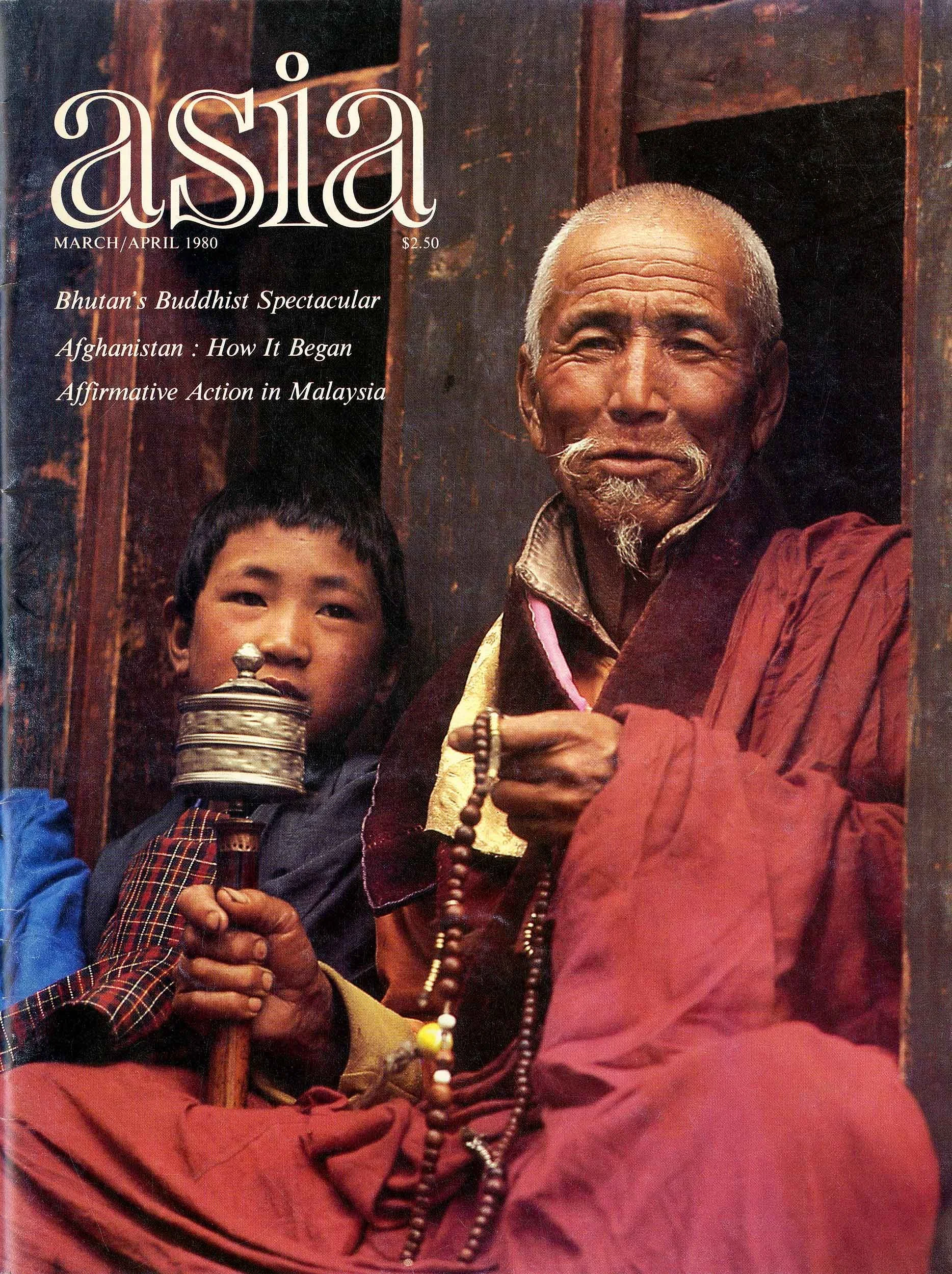
In the fall of 1979, while making a film in Bhutan with Richard Breyer, “The Royal Dancers of the Kingdom of Bhutan,” I photographed the Thimphu Tshechu Festival. My photographs were published in Asia Magazine and Natural History Magazine.
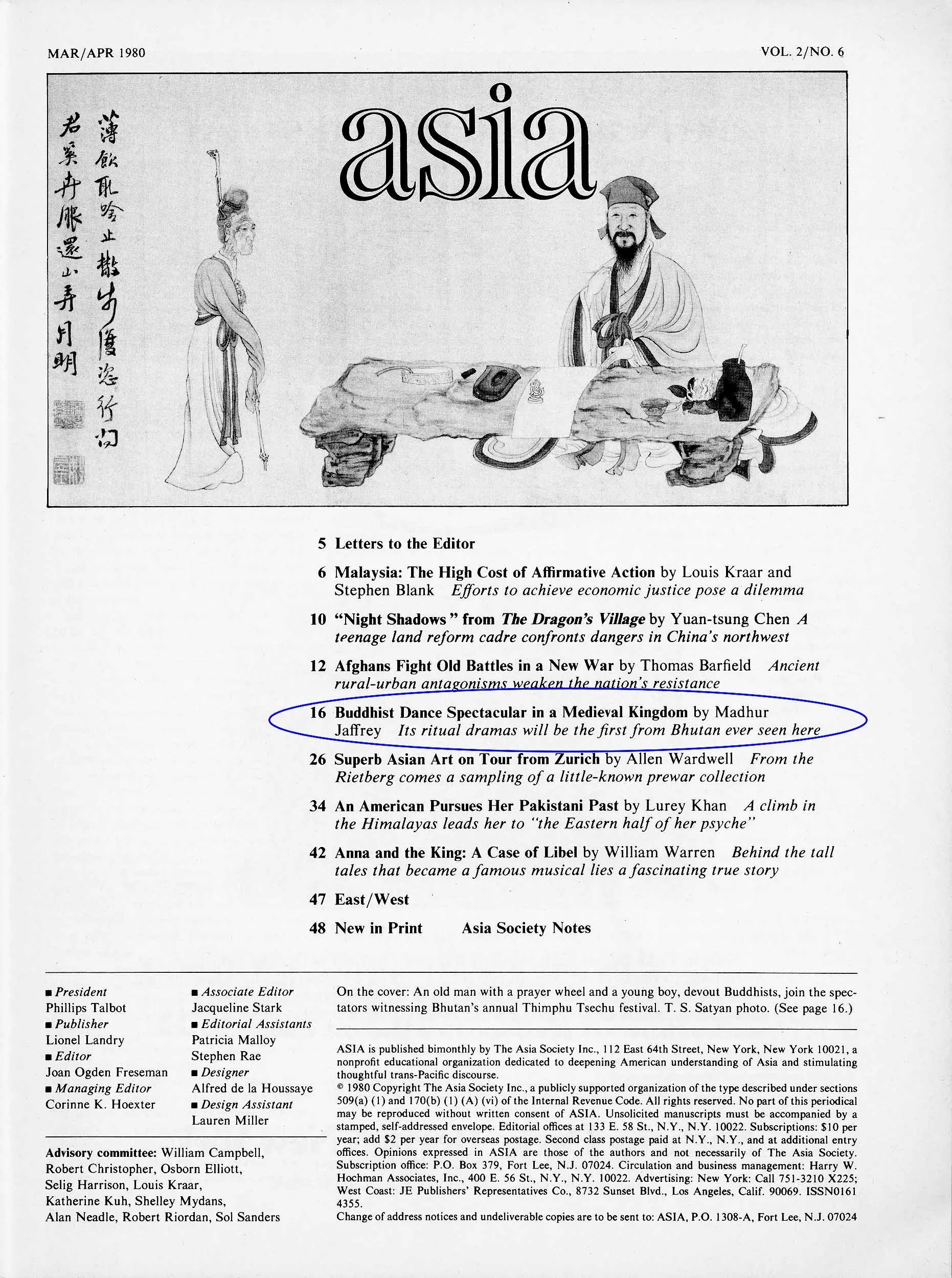
Invited by the king of Bhutan and the Asia Society in New York, we filmed the Royal Dancers performing during the fall festival. I also made many photographs.
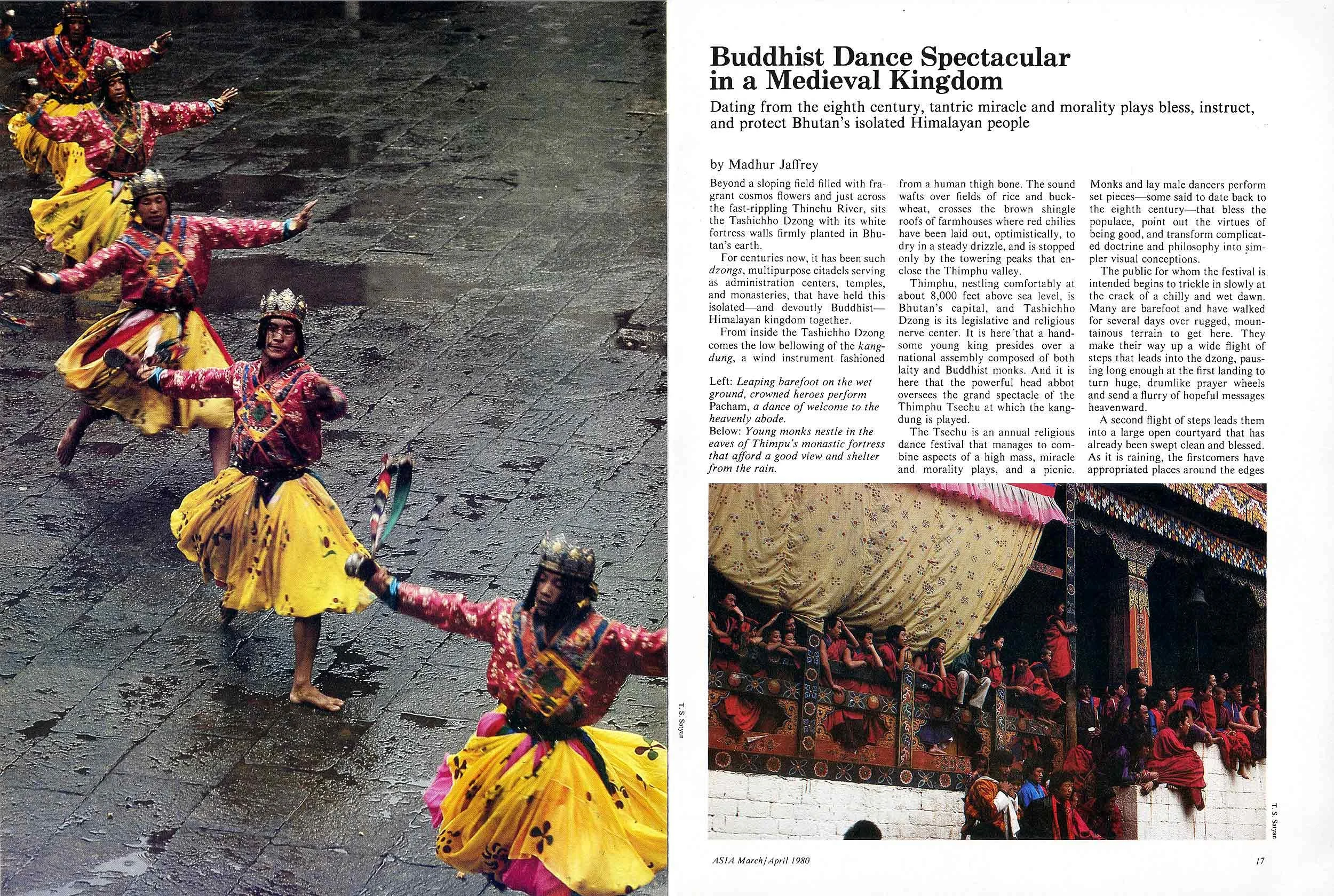
I was recording sound for the film from the portico of the Thimphu Dzong. As you can see in this photograph, I was always surrounded by monks watching the dances and religious plays taking place below in the large courtyard of the monastery.
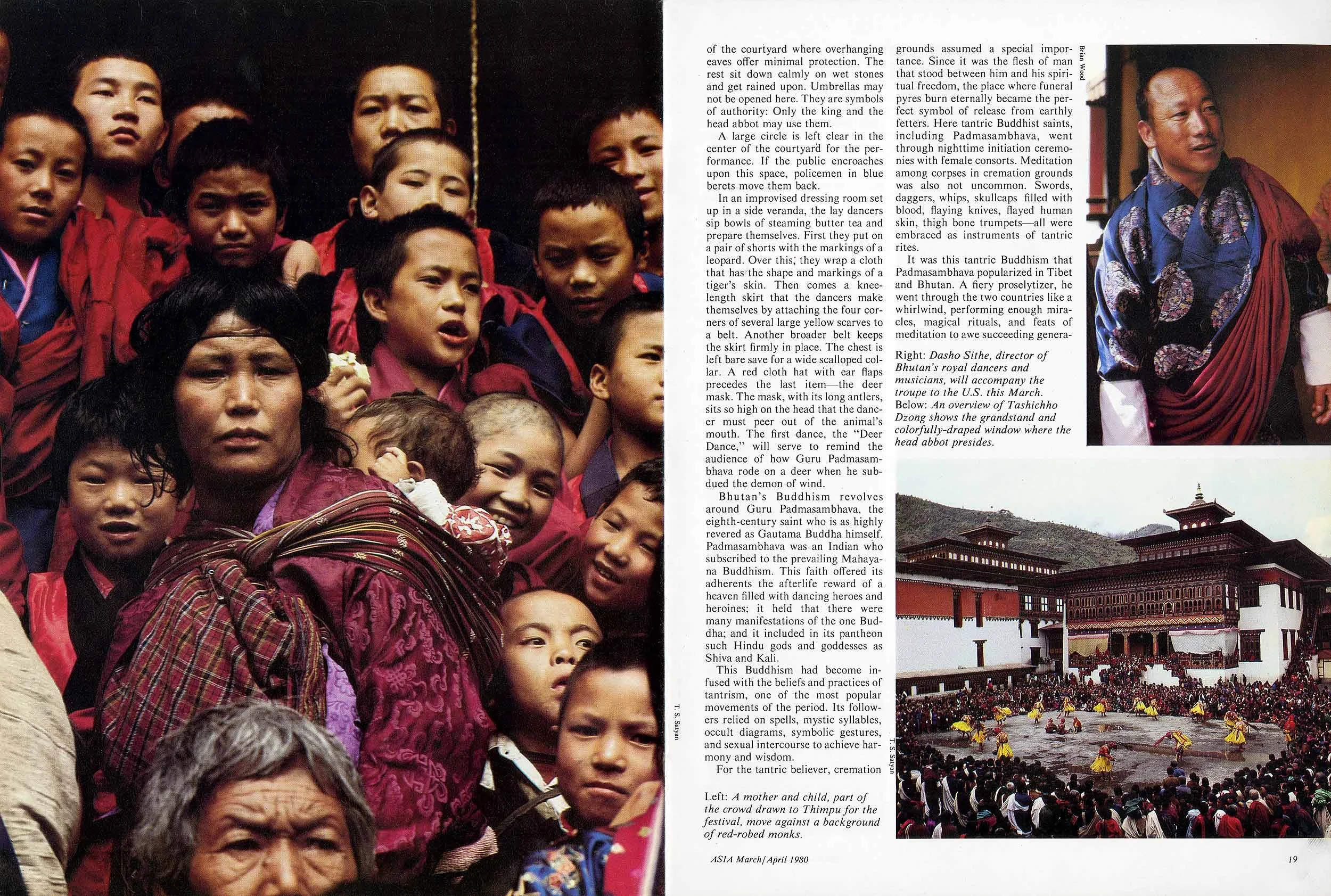
Dasho Sithe, director of Bhutan’s royal dancers (photo on the right), invited us to work very closely with the dancers and welcomed us into his home to share meals with his family.
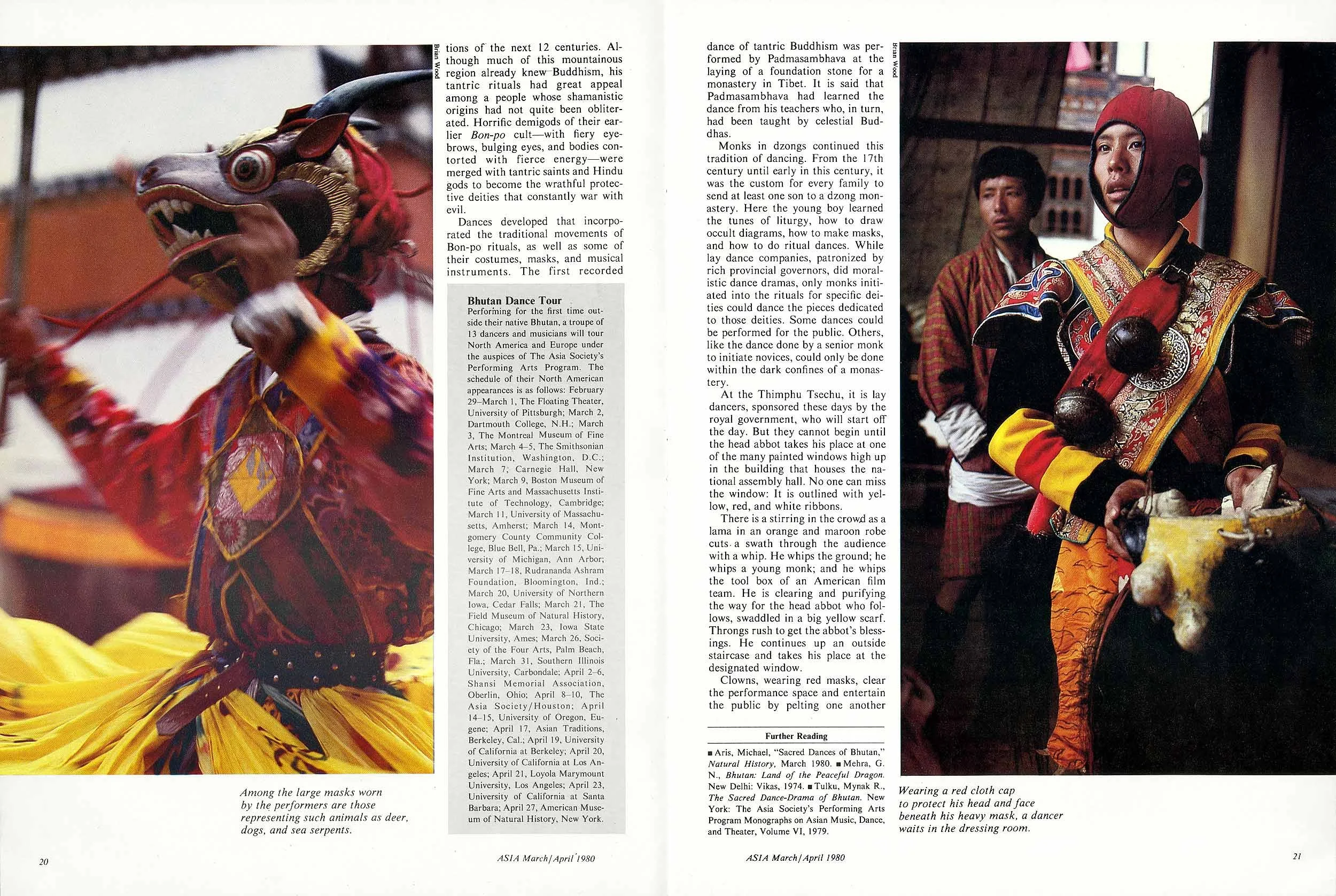
We spent the entire festival “embedded” with the dance troupe so that we could film and photograph all of their activities and preparations for their performances in the Dzong. We got to know many of the dancers very well.
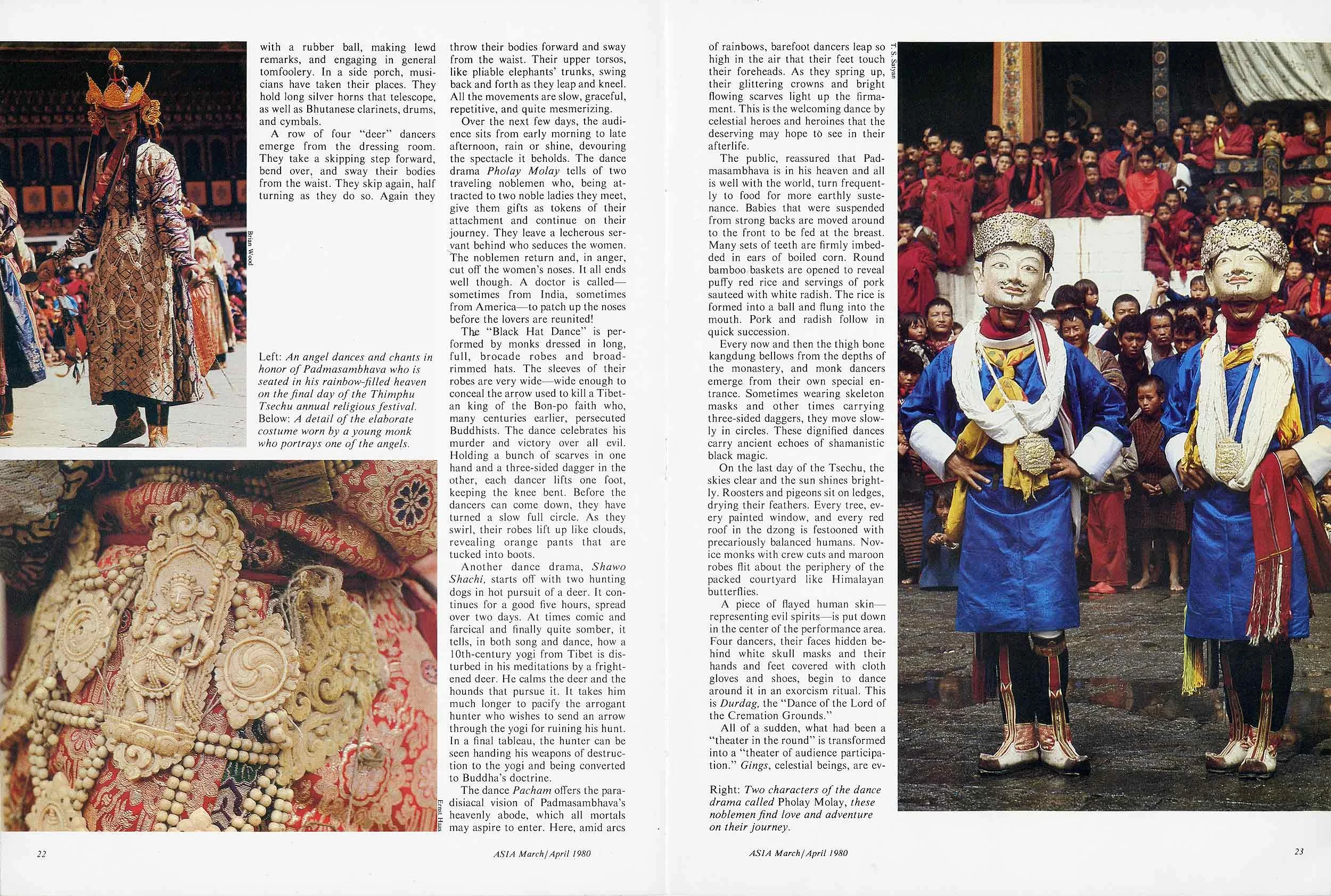
The Royal Dancers are secular dancers, supported by the royal court, but the monastery also has a troupe of dancers - all monks. You can see them here wearing ancient costumes and heavy ornamental aprons of plaques and beads carved from bone, making haunting cascades of sound - a rhythmic clacking and clicking as thousands of bones sway and rattle as the monks dance.
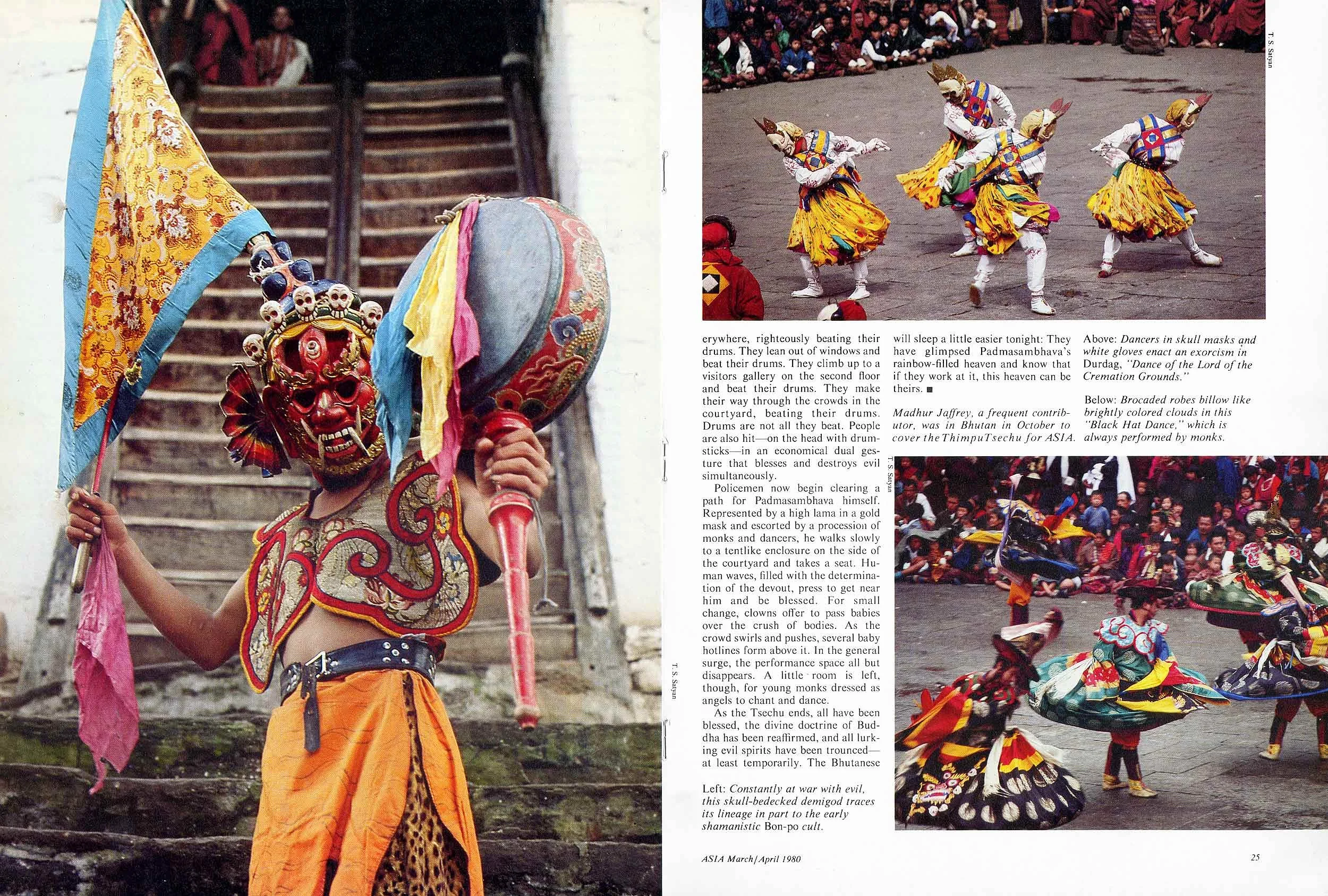
Bhutanese Buddhism is deeply influenced by the earlier Bon shamanistic religion. You can see these deep roots in the dancers’ masks and costumes, and the sculptural and painted imagery throughout the monastery, interleaving with Tibetan tantric images and mandalas.