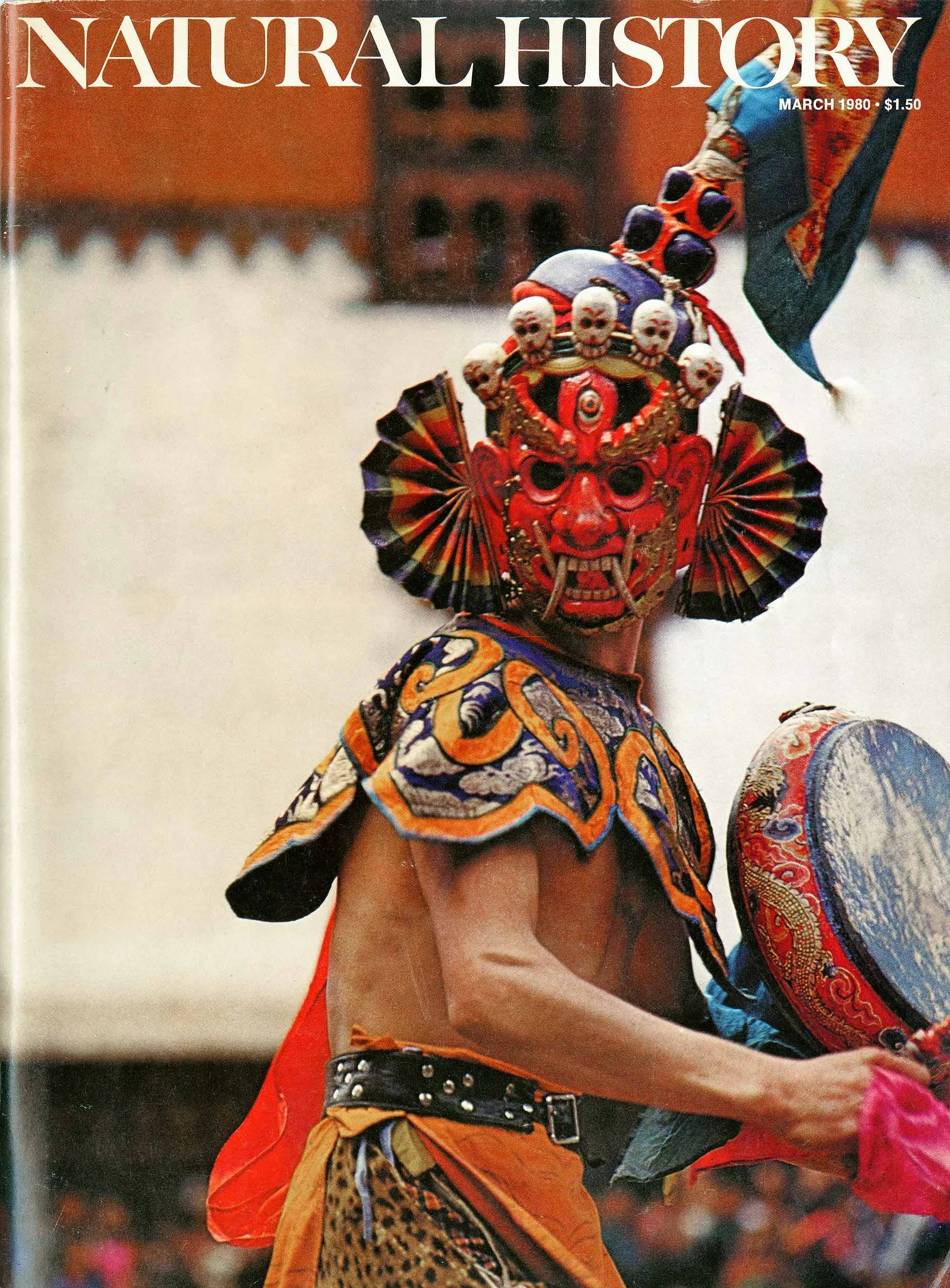
In the fall of 1979, while making a film in Bhutan with Richard Breyer, “The Royal Dancers of the Kingdom of Bhutan,” I photographed the Thimphu Tshechu Festival. My photographs were published in Natural History Magazine and Asia Magazine.
Cover photograph by Brian Wood ©Brian Wood
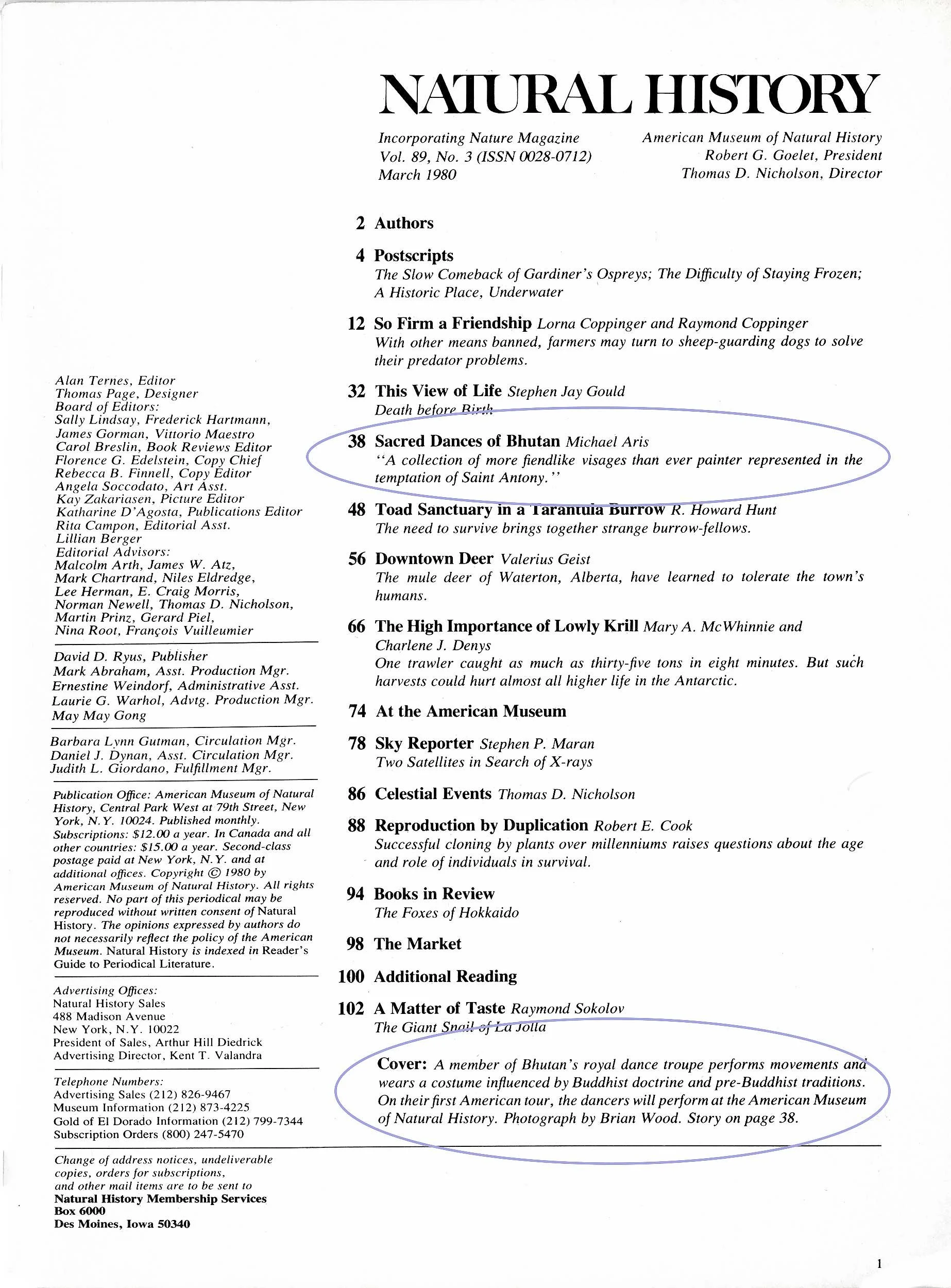
We were invited by the king of Bhutan and the Asia Society in New York to make a film and photograph the royal dancers.
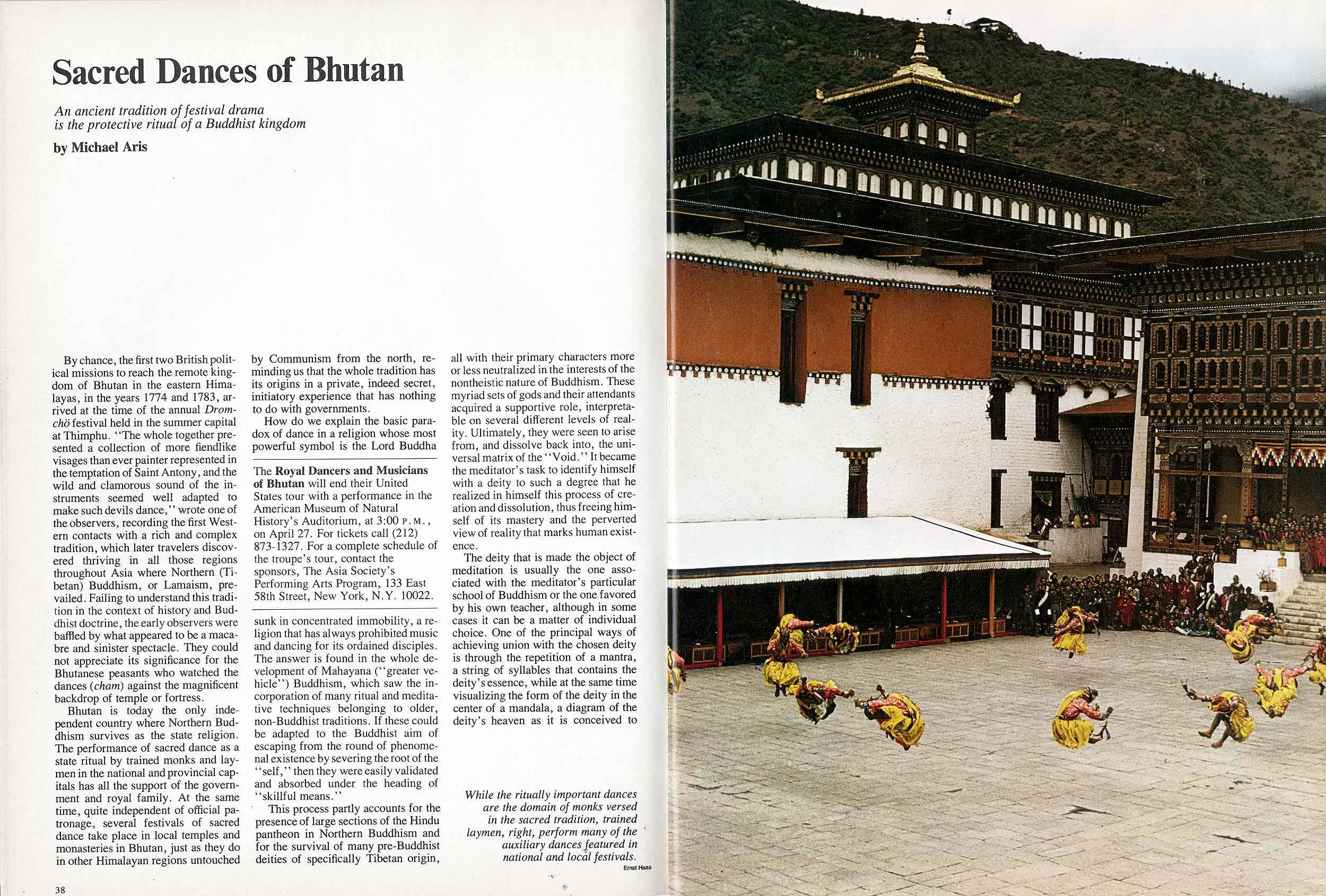
Every fall, the Bhutanese people gather in the capital city of Thimphu at the Thimphu Dzong, the Buddhist monastery, for the Thimphu Tshechu festival. They trek in from all over the country, sometimes walking for days from as high as 17,000 feet in the Himalayas, for several days of dances and religious plays.
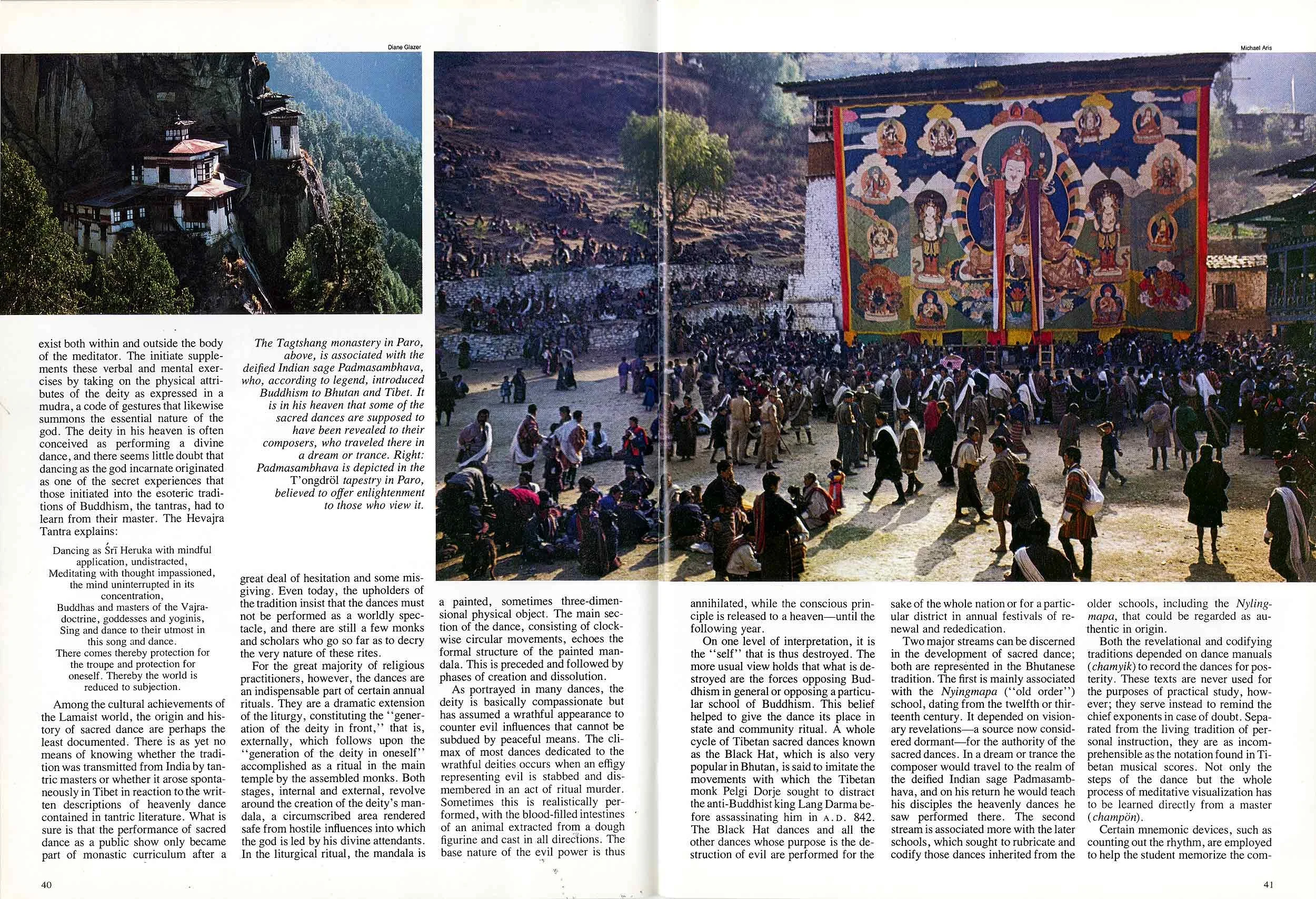
Many religious rituals are held during the festival, like the unfurling of this huge thongdrol thangka of Padmasambhava, the bringer of Vajrayana Buddhism to Bhutan in the 8th Century.
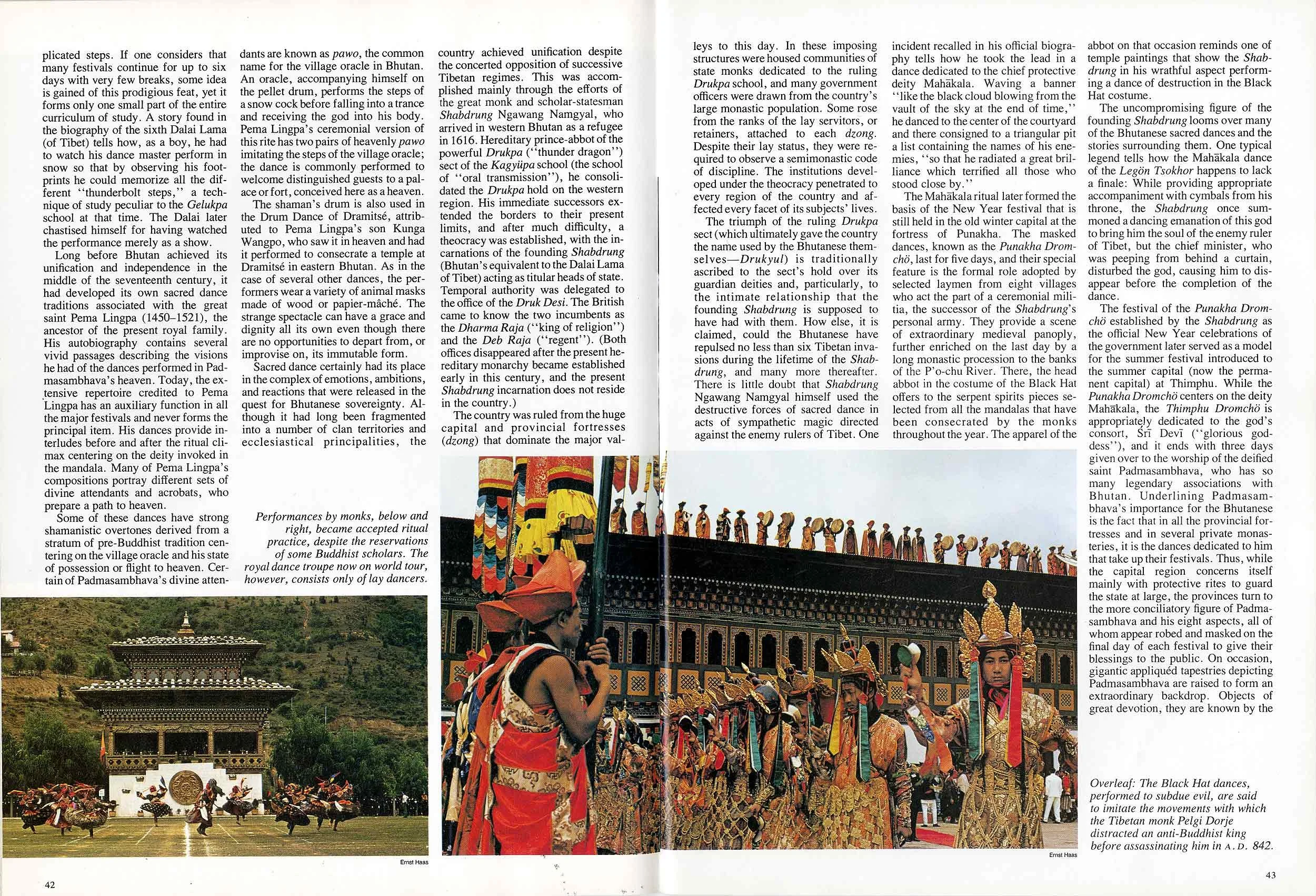
In addition to performances by the Royal Dancers (secular dancers chosen in childhood and supported by the royal court), there were complex dances by the monastery’s monks. A dance would often last for hours, performed by monks wearing elaborate, centuries-old costumes covered in carved bone and precious metals.
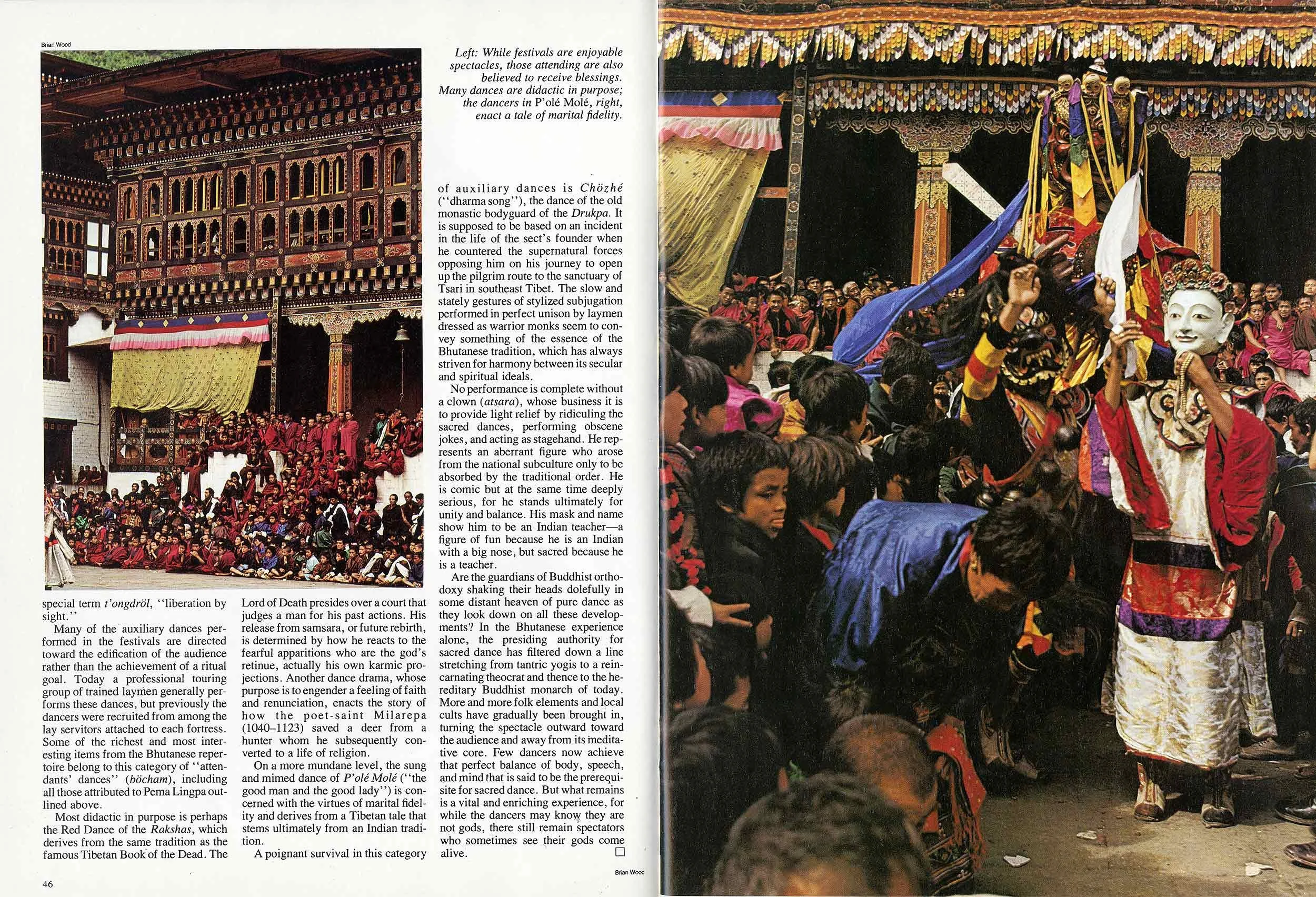
It was very moving to participate in these powerful enactments. I felt wholly embraced and held by the crowd, by the dancers and monks, by the Buddhist mind. It was a life-changing experience that deeply influenced my art.